
About Us
IRADA the Foundation for Research and Advocacy advances democratic
transformation by combining research, advocacy, and citizen participation.
IRADA is a registered civil society organization that works for catalyzing participatory reforms and development through evidence-based research, proactive policy advocacy, and vigorous capacity-building initiatives. It is a successor to the IRADA trust set up in 2011 by senior journalists and legal experts to promote: inclusivity and pluralism; transparency and governance; freedom of expression and media development; rule of law and legislative reforms. That trust, however, had to be dissolved in 2022 under the coercive regulations brought in by the government of Pakistan to control and curb civil society organizations working on the promotion of civil liberties.
In 2023, three young women closely related to two of the founders of the trust decided to revive it with a new registration. One of them had recently graduated in law from Warwick University, in the United Kingdom; the other had gained serious experience of working on gender-related issues after completing a master’s in Gender Studies from the Punjab University, and the third had accumulated vast experience of project management by working at several renowned non-government organizations. The task ahead of them was extremely arduous: to pass through massive government scrutiny and large spools of bureaucratic red tape to get the new organisation registered. It took them more than a year, countless rounds of government offices, and several revisions of their founding documents to get it done. IRADA finally started functioning as a foundation in July 2024.
To ensure continuity between IRADA, the trust, and IRADA, the foundation, two of the former’s founders became the patron and the executive director of the latter.
Building an Informed, Democratic, and Inclusive polity
Vision
We envision a democratic, inclusive, and informed polity where citizens enjoy and exercise their fundamental freedoms
Mission
IRADA advances fundamental freedoms by shaping enabling legal frameworks, promoting transparency and digital equity, and facilitating citizens’ access to technology and information

Patron & Principal Advisor
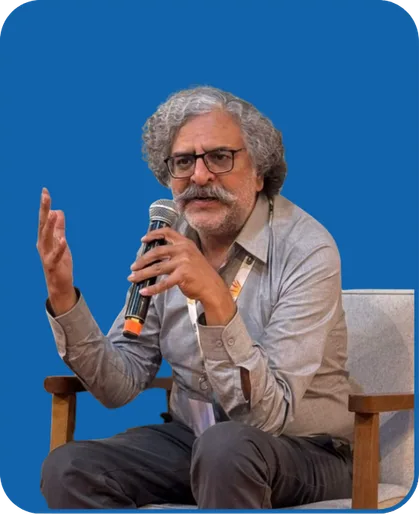
Muhammad Badar Alam started his professional career as a journalist in 1992 when he became a researcher and writer for daily Jang’s Sunday magazine in Lahore. Afterwards, he worked on senior editorial positions with several leading news organizations, including daily The News International, The News on Sunday, and Pakistan’s premium English language monthly magazine, Herald, which he joined as its bureau chief in Lahore in 2007.
In 2010, he became the editor of Herald and continued to work in this position till July 2019, when the magazine’s independent editorial policy and fearless investigative journalism led to its forced closure. In April 2020, Badar co-founded loksujag.com, a news website focused on amplifying voices from the margins of power. He served as its chief editor till 9 November 2022.
He has also been the executive director of Rural Development Policy Institute (RDPI), a non-government organization based in Islamabad, between September 2019 and February 2022, and a director of Sustainable Development Policy Institute (SDPI), an Islamabad-based think-tank, between August 2019 and March 2020.
Founding Directors
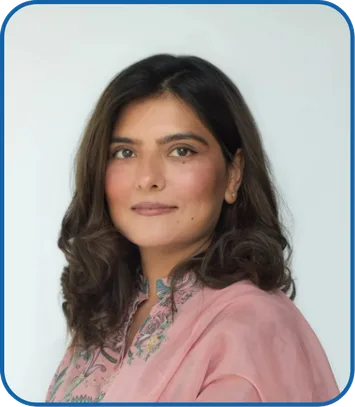
MOQADAS HANIF
DIRECTOR AND CHAIRPERSON
Moqadas Hanif is a development and communications professional with over ten years of experience working with nonprofit organizations in Pakistan and internationally.
Her work focuses on strengthening organizational visibility, building partnerships, and supporting program through clear, purposeful communication. She has led communication strategies, donor engagement, branding, and fundraising support, and has managed teams responsible for content, design, and digital outreach.
She has worked closely with donors, partners, and communities, and has supported large-scale campaigns, events, and reporting that connect impact with people. She holds a Master’s degree in Project Management and a Master’s in Behavioral Sciences.
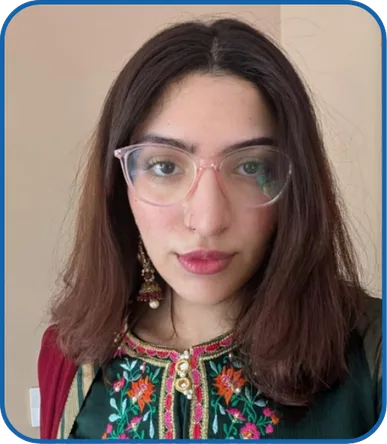
DRAKHSHANDAE BADAR
DIRECTOR
Drakhshandae Badar received a Bachelor’s in Law (LLB) degree, with a focus on Human Rights and International Law, from the Warwick University, England. She has worked at the Lahore University of Management Sciences (LUMS) as a research assistant on the case of Noor Muqaddam. Her research focuses on a critique of state feminism and identity politics. She has also worked with the Human Rights Commission of Pakistan (HRCP) on a project related to the freedom of expression. Besides being the founding director of IRADA Foundation, she is also the managing editor of Mauj Private Limited, an independent news media company dedicated to public interest journalism, particularly on climate change, rights of the marginalised groups and communities and the constitutionally guaranteed civil liberties.
Drakhshandae’s activism and writing are informed both by her academic interests and her lived experiences. Her research focuses on the intersectional and a gender informed dimension of the human rights discourse in Pakistan in particular and South Asia in general. Her work aims at uncovering the sociolegal challenges that women face in access to justice and mobility.
She also has extensive experience in providing trainings to address discrimination and harassment at workplace.
Drakhshandae Badar received a Bachelor’s in Law (LLB) degree, with a focus on Human Rights and International Law, from the Warwick University, England. She has worked at the Lahore University of Management Sciences (LUMS) as a research assistant on the case of Noor Muqaddam. Her research focuses on a critique of state feminism and identity politics. She has also worked with the Human Rights Commission of Pakistan (HRCP) on a project related to the freedom of expression. Besides being the founding director of IRADA Foundation, she is also the managing editor of Mauj Private Limited, an independent news media company dedicated to public interest journalism, particularly on climate change, rights of the marginalised groups and communities and the constitutionally guaranteed civil liberties.
Drakhshandae’s activism and writing are informed both by her academic interests and her lived experiences. Her research focuses on the intersectional and a gender informed dimension of the human rights discourse in Pakistan in particular and South Asia in general. Her work aims at uncovering the sociolegal challenges that women face in access to justice and mobility.
She also has extensive experience in providing trainings to address discrimination and harassment at workplace.
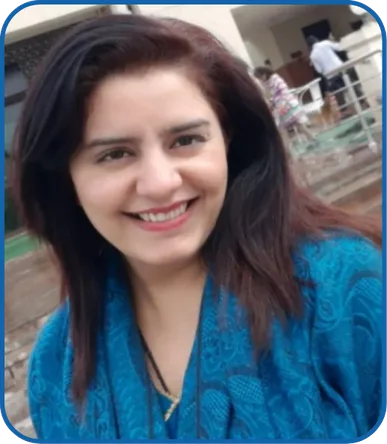
AMMARA MANZOOR
DIRECTOR
Ammara Manzoor is a committed development professional with wide experience in gender mainstreaming, community mobilization, and stakeholder engagement.
She is currently serving as a Gender Associate Expert with the Punjab Intermediate Cities Improvement Investment Program (PICIIP), where she supports gender-responsive planning, implementation, and monitoring of project activities to ensure inclusive development outcomes for women and marginalized groups.
Ammara holds a Master’s degree in Gender Studies from the University of the Punjab, Lahore.
Advisory Board
Zafarullah Khan
Zafarullah Khan is a civic educator, human rights advocate, and researcher. Currently he is serving as the Chief Executive, Ideas for Vision 2047. He launched first-ever ‘Constitutional Literacy Campaign’ in the country for the citizen’s socialization with their social contract-the Constitution of Pakistan. His book; Consistent Parliamentary Cord: Fundamental Rights of the Citizens of Pakistan has been published and launched by the Senate of Pakistan. Mr. Khan served as Executive Director (May 2016-April 2019) of Pakistan Institute for Parliamentary Services (PIPS) of the Parliament. He briefly served as Member-Islamabad at National Commission for Human Rights. Mr. Khan was Executive Director of Centre for Civic Education Pakistan (2002-2016). In 2016 Mr. Khan was given Human Rights Award (Civil and Political Rights) of Federal Ministry of Human rights by the President of Pakistan
Myra Imran
Myra Imran, a seasoned print media journalist at The News, serves as the Vice President of the National Press Club (NPC) and held the same position in the Rawalpindi Islamabad Union of Journalists in 2020 and 2021. Elected twice as the Vice President of the NPC in 2017 and 2018, she focuses her reporting on human rights. Myra is a versatile professional, functioning as a researcher, documentary maker, and trainer. She is one of the global leadership trainers of Women Learning Partnership. She has contributed as a media trainer for organizations such as Internews, Search for Common Grounds, Individualland and more. Her role as Deputy Editor and Media Research at JournalismPakistan.com showcases her dedication to media-related news, including her recognized research on families of FATA journalists. As a communication expert, Myra has worked with Ministry of Human Rights, National Commission on the Status of Women (NCSW), UN Women, Aurat Foundation and National Commission for Human Rights (NCHR). Her extensive experience includes hosting a current affair show at Khyber TV, web show at DBTV, and being a Rotary Peace Fellow and IVLP Alumina
Farieha Aziz
Farieha Aziz is a Karachi-based, APNS-awardwinning journalist. She is a co-founder and Director at Bolo Bhi. She has a masters in English literature. She worked with Newsline from July 2007-January 2012 and taught literature to grades 9-12. She served as an amicus curiae in a case filed in the Lahore High Court in 2013, challenging the ban on YouTube, and is currently a petitioner on behalf of Bolo Bhi in a case filed in the Islamabad High Court challenging government’s censorship on the Internet and the powers of the regulator. When she is not raging over Internet censorship or poor Internet connectivity, she chooses to turn to cricket, Star Wars, Lord of the Rings, Harry Potter and qawwalis for sanity. She can be found on Twitter: @FariehaAziz and reached via email: farieha@bolobhi.org
Saroop Ijaz
Saroop Ijaz is a lawyer, human rights activist and the senior counsel for Asia, Human Rights Watch (HRW). He is a member of the governing council of Human Rights Commission of Pakistan (HRCP). He is also a visiting faculty member at Lahore University of Management Science (LUMS). Saroop has researched, written reports and done international and domestic advocacy on issues ranging from the fundamental rights of religious minorities in Pakistan, police reform, Afghan refugees, attacks on schools, garment workers to Pakistanis in prisons in Saudia Arabia, environmental rights in the Maldives and the criminal justice system in Japan, amongst several others. Saroop has been consultant and adviser for the European Union, World Bank, International Commission of Jurists, British Council, and various other organizations and presently serves on the board of several civil society organizations. Saroop has been appointed as an Amicus Curaie (Friend of the Court) in several important constitutional cases in Pakistan. Saroop is a regular opinion writer and commentator for several notable Pakistani and international publications including The Los Angeles Times, Guardian, OpenDemocracy, Jurist, Dawn amongst others.
Kamal Siddiqi
Kamal Siddiqi is a journalist by profession and held his last position as Director News at Aaj TV. Prior to that, he was Director of the Center for Excellence in Journalism at IBA. He has over twenty-six years of experience in journalism. He was also the Editor of The Express Tribune, English language daily in Pakistan affiliated to the International New York Times.
He was a Jefferson fellow in 2006.
He is also a fellow of the Center for Democratic Development and Rule of Law (CDDRL) at Stanford University.
He holds an MSc Economics with specialization in Media and Communication Studies from the London School of Economics.
He has worked as a lecturer in Journalism at Monash University, Australia and has taught at several universities in Pakistan.
Zafarullah Khan
Zafarullah Khan is a civic educator, human rights advocate, and researcher. Currently he is serving as the Chief Executive, Ideas for Vision 2047. He launched first-ever ‘Constitutional Literacy Campaign’ in the country for the citizen’s socialization with their social contract-the Constitution of Pakistan. His book; Consistent Parliamentary Cord: Fundamental Rights of the Citizens of Pakistan has been published and launched by the Senate of Pakistan. Mr. Khan served as Executive Director (May 2016-April 2019) of Pakistan Institute for Parliamentary Services (PIPS) of the Parliament. He briefly served as Member-Islamabad at National Commission for Human Rights. Mr. Khan was Executive Director of Centre for Civic Education Pakistan (2002-2016). In 2016 Mr. Khan was given Human Rights Award (Civil and Political Rights) of Federal Ministry of Human rights by the President of Pakistan
Myra Imran
Myra Imran, a seasoned print media journalist at The News, serves as the Vice President of the National Press Club (NPC) and held the same position in the Rawalpindi Islamabad Union of Journalists in 2020 and 2021. Elected twice as the Vice President of the NPC in 2017 and 2018, she focuses her reporting on human rights. Myra is a versatile professional, functioning as a researcher, documentary maker, and trainer. She is one of the global leadership trainers of Women Learning Partnership. She has contributed as a media trainer for organizations such as Internews, Search for Common Grounds, Individualland and more. Her role as Deputy Editor and Media Research at JournalismPakistan.com showcases her dedication to media-related news, including her recognized research on families of FATA journalists. As a communication expert, Myra has worked with Ministry of Human Rights, National Commission on the Status of Women (NCSW), UN Women, Aurat Foundation and National Commission for Human Rights (NCHR).
Farieha Aziz
Farieha Aziz is a Karachi-based, APNS-awardwinning journalist. She is a co-founder and Director at Bolo Bhi. She has a masters in English literature. She worked with Newsline from July 2007-January 2012 and taught literature to grades 9-12. She served as an amicus curiae in a case filed in the Lahore High Court in 2013, challenging the ban on YouTube, and is currently a petitioner on behalf of Bolo Bhi in a case filed in the Islamabad High Court challenging government’s censorship on the Internet and the powers of the regulator. When she is not raging over Internet censorship or poor Internet connectivity, she chooses to turn to cricket, Star Wars, Lord of the Rings, Harry Potter and qawwalis for sanity. She can be found on Twitter: @FariehaAziz and reached via email: farieha@bolobhi.org
Saroop Ijaz
Saroop Ijaz is a lawyer, human rights activist and the senior counsel for Asia, Human Rights Watch (HRW). He is a member of the governing council of Human Rights Commission of Pakistan (HRCP). He is also a visiting faculty member at Lahore University of Management Science (LUMS). Saroop has researched, written reports and done international and domestic advocacy on issues ranging from the fundamental rights of religious minorities in Pakistan, police reform, Afghan refugees, attacks on schools, garment workers to Pakistanis in prisons in Saudia Arabia, environmental rights in the Maldives and the criminal justice system in Japan, amongst several others. Saroop has been consultant and adviser for the European Union, World Bank, International Commission of Jurists, British Council, and various other organizations and presently serves on the board of several civil society organizations. Saroop has been appointed as an Amicus Curaie (Friend of the Court) in several important constitutional cases in Pakistan.
Kamal Siddiqi
Kamal Siddiqi is a journalist by profession and held his last position as Director News at Aaj TV. Prior to that, he was Director of the Center for Excellence in Journalism at IBA. He has over twenty-six years of experience in journalism. He was also the Editor of The Express Tribune, English language daily in Pakistan affiliated to the International New York Times.
He was a Jefferson fellow in 2006.
He is also a fellow of the Center for Democratic Development and Rule of Law (CDDRL) at Stanford University.
He holds an MSc Economics with specialization in Media and Communication Studies from the London School of Economics.
He has worked as a lecturer in Journalism at Monash University, Australia and has taught at several universities in Pakistan.
The Team
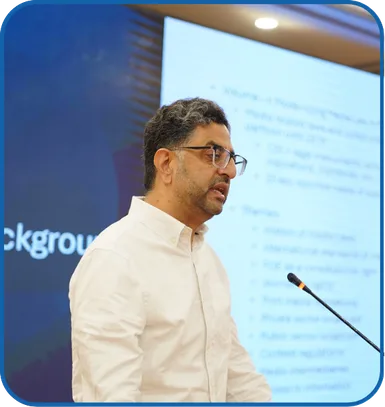
Muhammad Aftab Alam
Executive Director
Muhammad Aftab Alam is a law and policy expert with more than 20 years of work experience in the fields of rule of law, right to information and transparency, freedom of expression and media development, and governance and legislative reforms.
Since 2001, Mr. Alam has been involved in research and advocacy for right to information legislation, online freedom, media – offline and online – law and regulatory reforms, rights of media workers and journalists, safety and security of journalists and ethical challenges in media in Pakistan.
Mr. Alam has been part of the efforts to forge multi-stakeholder alliances and networks such as the Coalition Against Disinformation (CAD), Pakistan Journalist Safety Coalition (PJSC), Alliance for Diversity and Pluralism in Media (ADPM), Pakistan Coalition on Media Legal reforms (PCMLR) and Coalition on Right to Information (CRTI).

Nida Sultan
Deputy Director (Executive)
Nida is a senior development and operations professional with over 15 years of experience leading donor-funded programmes across education, humanitarian response, and public-sector reform. She has managed large-scale portfolios with organisations including Malala Fund, FCDO/DFID, USAID and UN partners, bringing strong expertise in programme
Salwa Rana
Programme Manager
Salwa Rana is a law graduate and a development professional with over five years’ worth of experience in digital rights, media development, free speech, and online gender-based violence. A graduate of the University of London, she started her career in the corporate sector. Alongside her law practice, she taught several courses for the LLB (Hons) of the University of London International Programmes. Salwa entered the development sector in 2018, working on the creation and operationalisation of a legal aid network “Charahgar” for journalists and media workers that were targeted for their free speech. Her work evolved further into advocacy for media freedom, online privacy, and gender-related issues. She has also trained dozens of journalists and lawyers on the state of media related legislation in Pakistan, along with conducting several workshops on cybersecurity and online safety for social activists and community mobilisers. She has also authored several research papers, focusing on law and policy related to freedom of expression, and routinely contributes to digital news platforms on matters at the intersection of tech and gender. In her current role, she is responsible for leading all research, policy, and advocacy related work along with project implementation.
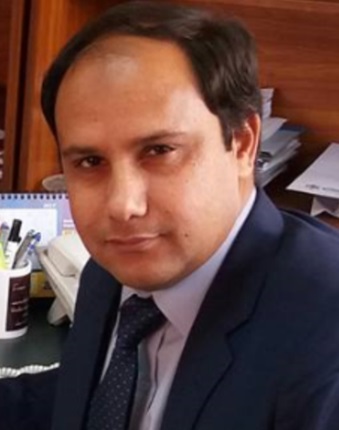
Dr. Abdur Rauf Khatana
Dr. Abdur Rauf Khatana, formerly the Head of the Law Department at Bahria University, is currently an Assistant Professor of Law at the International Islamic University Islamabad with over fifteen years of experience in higher education, legal research, academic leadership, and professional consultancy. His academic and research expertise spans International Human Rights Law, Artificial Intelligence Governance, Freedom of Expression, Digital Rights, International Humanitarian Law, Legal Theory, and Human Rights and Islamic Law. His work focuses on examining the legal and institutional implications of emerging technologies for human rights protection, democratic governance, and judicial systems.
Dr. Khatana holds a Ph.D. in Law from the International Islamic University Islamabad, where his doctoral research critically examined the universalization of international human rights law through the effectiveness of United Nations human rights enforcement mechanisms. His research adopts doctrinal and interdisciplinary approaches to address contemporary challenges in international law, technology regulation, and global governance.
His scholarly contributions include Liberalization of International Human Rights Law: An Appraisal of Enforcement Mechanisms (2025), Modernizing Media Law in Pakistan: Review of Legal Frameworks Governing Media, Cyberspace and Tech Sectors (2016–2025) (IRADA, 2025), Freedom of Expression in International Human Rights Law and Challenges from Islamic Law in Pakistan (2024), Protecting Journalists and Media Workers in the International Labour Law Framework (2023), and Annual State of Digital Journalism in Pakistan 2023 (Lead Researcher, IRADA). His publications reflect a sustained commitment to advancing scholarship on human rights, digital governance, media regulation, and legal reform.
In addition to his academic responsibilities, Dr. Khatana has served as a consultant, trainer, and resource person for national and international organizations, including the International Committee of the Red Cross (ICRC), The Asia Foundation, the Federal Judicial Academy, the Islamic Research Institute, Institute for Research, Sharia Academy and Advocacy and Development (IRADA). His current research explores algorithmic governance, AI regulation, and the right to truth in the digital age and the localization of international AI governance standards within domestic legal and judicial systems, with the broader objective of developing rights-based legal frameworks for responsible and accountable governance of emerging technologies.
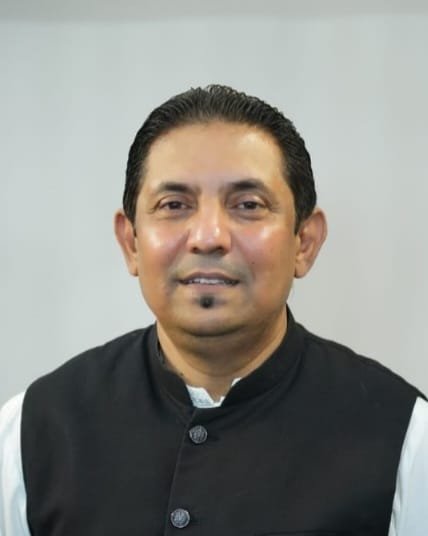
Dr. Shafiq Ahmad Kamboh
Health and Environmental Communication Expert
Dr. Shafiq Ahmad Kamboh is an Assistant Professor at the Department of Digital Media, School of Communication Studies, University of the Punjab, Lahore, and holds a PhD in Development Communication from ZeMKI, University of Bremen, Germany. He brings to IRADA an uncommon combination of academic standing and applied field research experience.
As an academic, he is among Pakistan’s most widely published scholars in health, science, and environmental communication, with peer-reviewed articles in high-impact-factor journals including Health Communication, Environmental Communication, Journal of Science Communication, Journalism Studies, Third World Quarterly and Development Policy Review, alongside book chapters with Routledge/Taylor & Francis, authored with known global researchers (https://scholar.google.com/citations?user=JdmqgigAAAAJ&hl=en&oi=ao).
As an applied researcher, he has led a number of large field studies for international development organizations. He served as Co-Principal Investigator and Communication Expert on the WHO-funded countrywide assessment of Lady Health Workers’ training for routine EPI service delivery, and most recently led the Punjab research team on the Mislai Gaon survey. His consultancy portfolio spans UNICEF, UNDP, UNESCO, DW Akademie, IECA, and International Media Support (IMS). He reviews for journals including Global Health Action, Health Education & Behavior, and Humanities and Social Sciences Communications (Nature), and is a regular expert voice on climate and public health in the national media.
Hassnain Ghayoor
Program Lead
Hasnain works as a freelance journalist and independent consultant. He began his career as a journalist with The Nation at its Islamabad office immediately after completing his masters in Political Studies from Quaid-e-Azam University, Islamabad. Later, he worked with WAQT News and also with Samaa News for a brief period before joining daily Dawn in Lahore. He also contributed for the Herald magazine and The News On Sunday in the following years. He has also worked as Chief Print & Electronic Media with Associated Press of Pakistan at its head office in Islamabad. In addition to that, he has worked with different national and international development organizations in various capacities. Currently, he works with IRADA as Program Lead for a project to Combat Climate Disinformation in Pakistan and as a freelance contributor with Earthwise, a web-based magazine focusing on clean energy transition.
Fatima Rashid
Program Assistant
Fatima Rasheed holds an MPhil in Public Policy from the National University of Sciences and Technology (NUST), with a research focus on climate change & social policy. At IRADA, she works on the Climate Communication Program to strengthen public understanding and dialogue around climate change in Pakistan. Passionate about linking media and policy, Fatima brings expertise in climate communication, research, and advocacy to support IRADA’s mission of advancing freedom of expression, human rights, and democratic governance.
Syeda Kashmala
Lead: Gender and Law
Syeda Kashmala is a lawyer and a media producer, based in Islamabad, specializing in pro-bono cases concerning women’s rights, rape, marital and domestic abuse. She is a founder of Aain foundation, working to ensure the delivery of justice and access to fundamental rights to all, especially the marginalized communities, a service that provides legal remedies to needy who cannot afford them. Kashmala has been part of the initiative Climate kahani, which tell the stories of climate change and its effect on the people by the people. She has worked with government and development organizations on the legislation and policy. She believes in the medium of consultation, research, group involvements and using of media to reach to masses to bring the change by including the ones who require that change the most. As an associate with IRADA, she is contributing to its various research, advocacy and strategic litigation initiatives
Zia Khan
Manager Operations
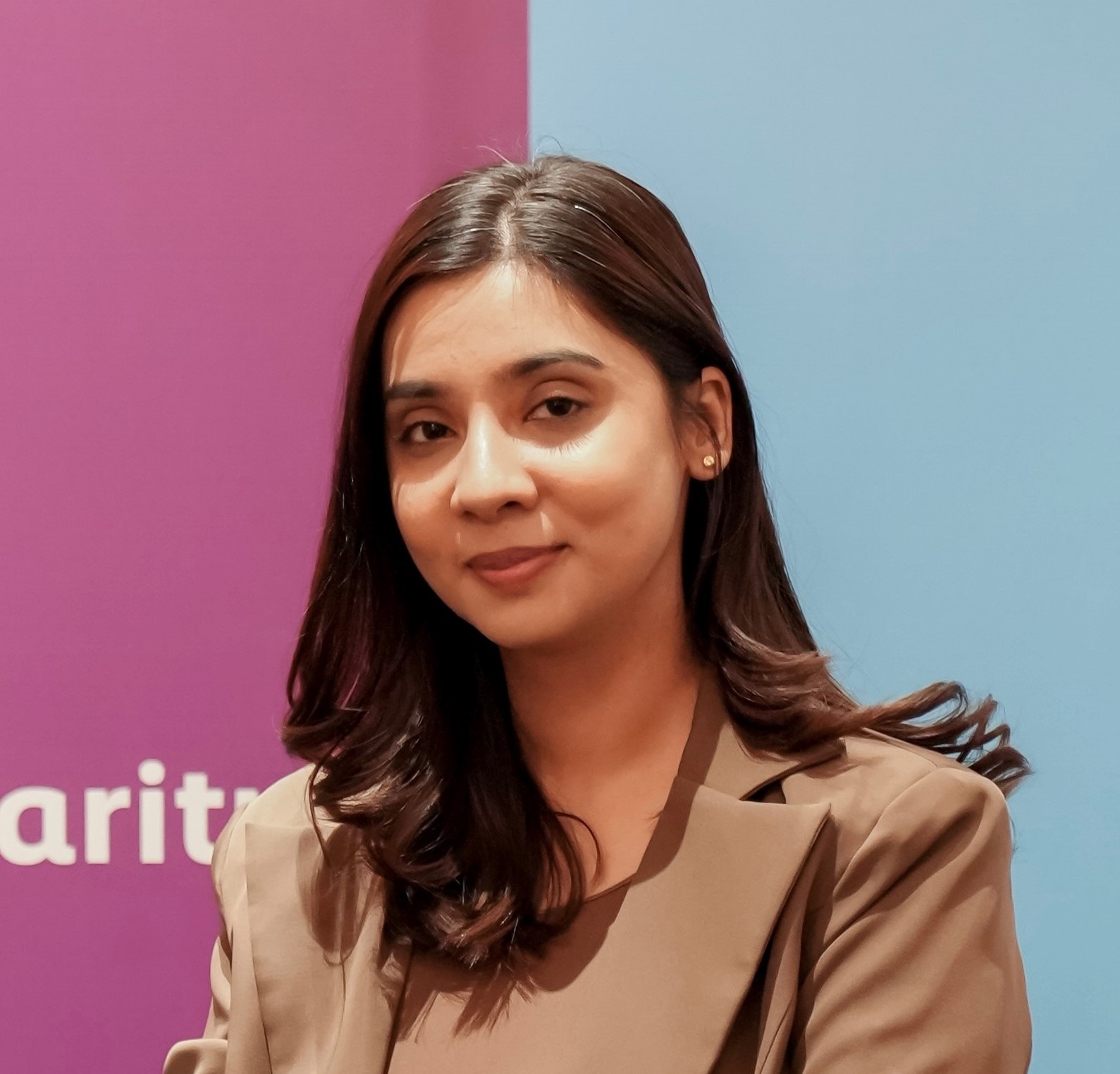
Zarmina Aijaz
Program Assistant
Zarmina Aijaz holds a Master’s degree and has gained valuable experience working on development initiatives in collaboration with leading organizations such as the Sustainable Development Policy Institute, Friedrich-Ebert-Stiftung Pakistan, and the Omar Asghar Khan Foundation. Through these engagements, she has strengthened her expertise in project coordination, research support, and digital communication, including social media content management. Currently she’s working with IRADA as Program Assistant, providing comprehensive support across program implementation and operations. Her role includes coordinating project activities, assisting with research, managing databases, and supporting administrative and communication functions. She also contributes to the timely monitoring and reporting of project progress.
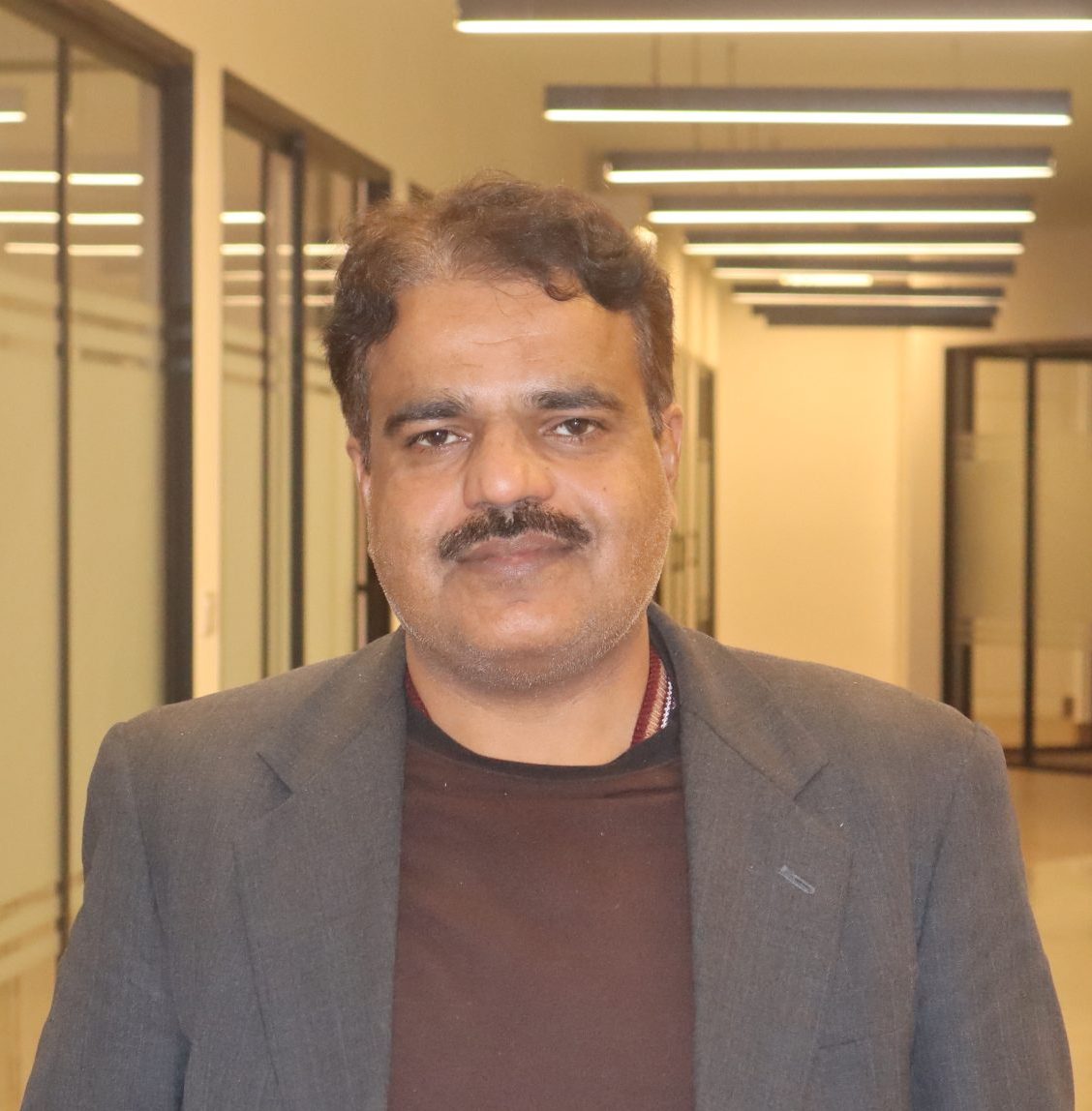
Khateeb ur Rehman
Finance and Admin Officer
Khateeb ur Rehman has more than 15 years of experience of managing finance and accounts for various commercial and non-profit organizations. He holds a Master of Business Administration (MBA) degree with concentration in Finance. He started his career as Branch Accountant-Credit & Collection Officer of International Pvt Ltd in 2004 and joined the development sector as a finance Officer in 2006. Since his arrival in the development sector, he has served in a number of non-profit organizations including Islamic Relief (IRP), Rural Development Project (RDP), UMEED Foundation and IRADA. In his current position, he is responsible for managing financial operations, including budgeting, accounting, and reporting, while also handling HR functions like recruitment, payroll, and employee relations.